Traverse benchmark adjustment
Traverse benchmark adjustment refers to a method used in surveying and geodesy to correct or adjust the measurements taken along a traverse. A traverse is a series of connected lines of known lengths and angles, typically used to determine the location of points on the earth's surface.
- Traverse
a traverse consists of a series of straight lines connecting points, with measurements taken for the lengths of the lines (distances) and the angles between them. These points are often known as stations or benchmarks.
- Benchmark
a benchmark is a fixed reference point with a known elevation or position, used in surveying to establish a base for measurements.
- Adjustment
over the course of a survey, minor errors can accumulate due to factors such as instrument inaccuracies, human error, or environmental conditions. Traverse benchmark adjustment is the process of correcting these errors to ensure the accuracy of the survey.
This adjustment ensures that the traverse closes properly, meaning that the starting and ending points align as expected. If the traverse does not close correctly, the data is adjusted using various methods (e.g., the bowditch rule or the least squares method) to distribute the error proportionally across the traverse.
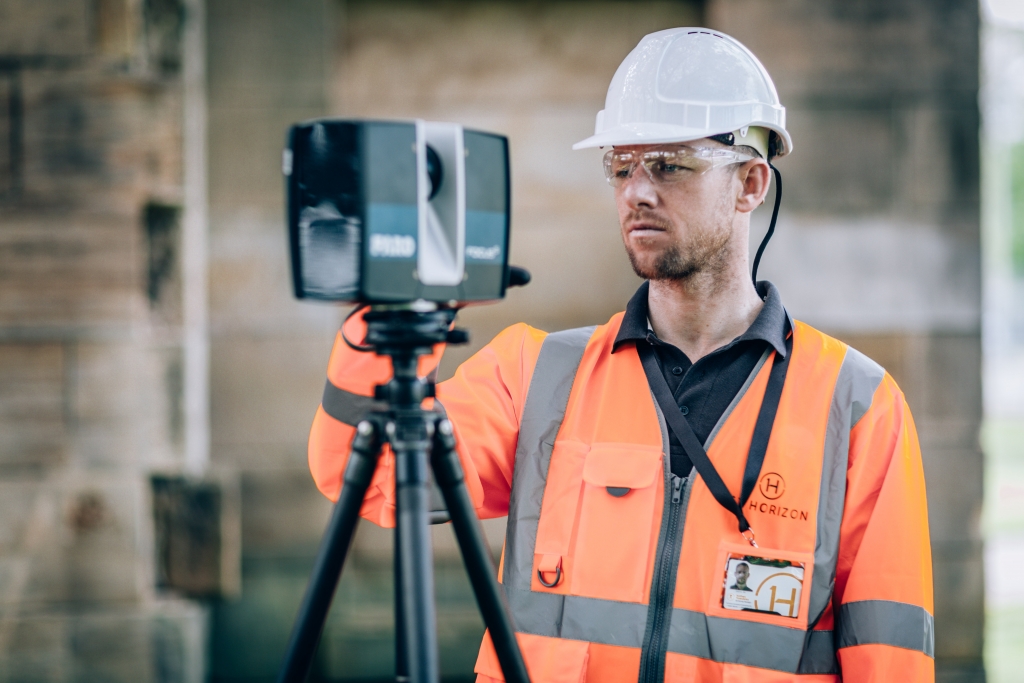
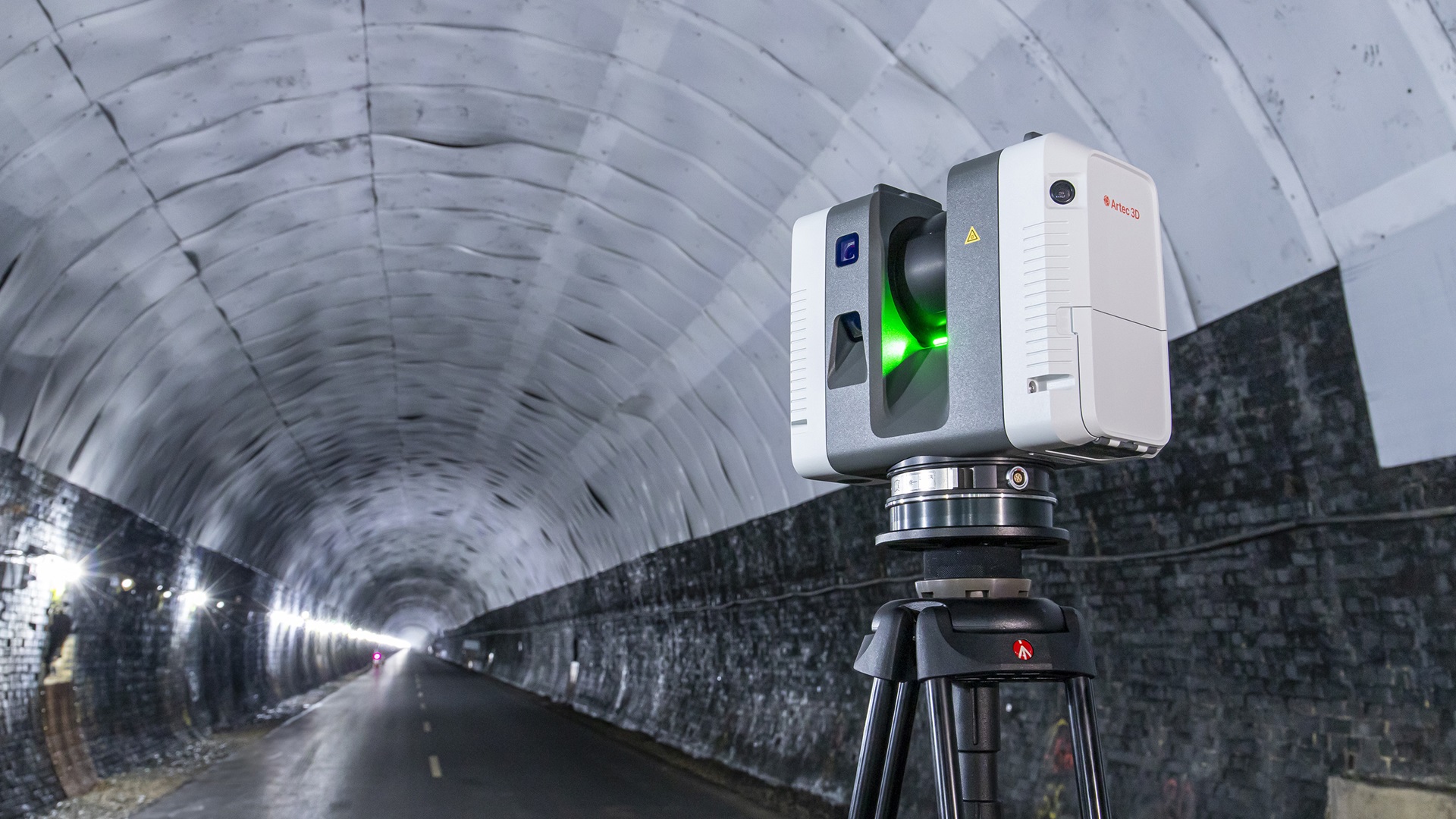
3d laser scan surveying, also known as 3d laser scanning or lidar (light detection and ranging), is a technology used to capture the precise shape and dimensions of objects or environments in three dimensions. This technique is widely used in various industries, including construction, architecture, engineering, archaeology, and manufacturing, to create detailed and accurate digital representations of physical spaces or objects.
Key components of 3d laser scan surveying:
Laser scanner: the core equipment used in 3d laser scanning. The scanner emits laser beams that bounce off surfaces and return to the scanner. By measuring the time, it takes for the laser to return, the scanner calculates the distance to each point on the surface, creating a “point cloud” of data.
Point cloud data: the collection of data points gathered by the laser scanner, each representing a specific location in space. These points collectively create a highly accurate 3D model of the scanned environment or object.
Software: specialized software processes point cloud data, allowing for the creation of 3d models, measurements, and other analyses. The software can also clean up the data, remove noise or unnecessary points, and stitch together multiple scans to form a complete model.

As-built surveying
As-built surveying is a specialized type of surveying that documents the precise location, dimensions, and features of a construction project after it has been completed. This process ensures that the finished construction matches the design plans and specifications or records any deviations that occurred during the building process. The resulting “as-built” drawings or models are essential for future maintenance, renovations, or expansions.
key components of as-built surveying:
purpose: verification: to confirm that the construction was completed according to the design plans and specifications. Documentation: to record any changes or deviations from the original design that occurred during construction. Compliance: to ensure the project meets regulatory requirements and building codes.
Process: field survey: surveyors visit the site after construction is complete (or during various phases of construction) to measure the exact locations and dimensions of the built elements. This can include buildings, utilities, roads, and other infrastructure.
Data collection: using tools like total stations, gps, laser scanners, and sometimes drones, surveyors collect precise data on the as-built conditions. This may involve measuring distances, elevations, and angles. Comparison: the collected data is compared to the original design plans to identify any differences. These differences are noted in the as-built documentation.
Report generation: the data is compiled into detailed as-built drawings, models, or reports that accurately reflect the completed construction. These documents show the exact locations and dimensions of all features as they exist.
LEVELING ADJUSTMENT
Leveling adjustment survey is a process in land surveying where measurements are taken to determine the relative heights of different points on the ground. This process is essential for establishing common datum, which can be used for construction, mapping, and various engineering projects.
Key components of a leveling adjustment survey:
Benchmarks: these are reference points with known elevations. All measurements in the leveling process are related to these benchmarks.
Leveling instrument: this is typically an optical instrument like a level or a theodolite, which helps in measuring the height difference between various points.
Staff (rod): a graduated rod used to measure the height difference between the instrument and the ground.
Field book: a record of all the measurements taken during the survey.
Process:
Setting up: the instrument is set up at a location where it has a clear view of the points to be measured.
Taking readings: the surveyor takes readings on the staff placed at various points, starting from the benchmark.
Back sight and foresight: the surveyor records the back sight (reading on a known point) and the foresight (reading on an unknown point) to calculate the height difference.
Adjustments: after completing the survey, adjustments are made to the recorded elevations to correct any errors or discrepancies, ensuring that the relative heights are accurate.
Calculations: the surveyor calculates the adjusted elevations for all points relative to the benchmark, considering any discrepancies found during the adjustment process.
Road Construction
In the past few years, Qatar has experienced a tremendous expansion in its infrastructure. Alyakht gulf is proud to have had the opportunity to successfully build several landmark roads, bridges, and highway projects with the highest quality and to be a part of Qatar’s 2030 vision. Alyakht gulf owns the latest equipment which includes asphalt paving machines, steel roller, asphalt milling machine, bobcat, tipper trucks, etc. Alyakht gulf also features a testing laboratory for daily testing of the asphalt produced, to ensure it is up to a high quality. Infrastructure and Transportation projects are often constructed within complex urban environments which require work to be phased around existing operation. The Alyakht gulf crew executes every project with priority to quality, safety, and time schedule; to guarantee its quality remains consistent and controlled, its job site safety protocols ensure protection for its staff and everyone around the construction sites.
MEP WORKS
- Mechanical
- The mechanical component of MEP is an important superset of HVAC services. Thus, it incorporates the control of environmental factors, either for human comfort or for the operation of machines. Heating, cooling, ventilation and exhaustion are all key areas to consider in the mechanical planning of a building.
- Electrical
- Virtually all modern buildings integrate some form of AC mains electricity for powering domestic and everyday appliances.
- Plumbing
- Laboratory testing automotive engines, showing plumbing and electrical setups integrated into the building • The scope of standard residential plumbing usually covers mains pressure potable water, heated water (in conjunction with mechanical and/or electrical engineers), sewage, storm water, natural gas, and sometimes rainwater collection and storage. In commercial environments, these distribution systems expand to accommodate many more users, as well as the addition of other plumbing services such as hydroponics, irrigation, fuels, oxygen, vacuum/compressed air, solids transfer, and more
MEP WORKS
Mechanical & Plumbing Division
The Mechanical Division is involved in a very pro active way to ensure that the project requirement is achieved. We are ready to carry out all diversities works including Central Air Conditioning, Plumbing, Drainage and Fire Protection with the top quality, efficiency, productivity and to the satisfaction of our clients. Design and build all works related to Mechanical Services HVAC Plumbing and Drainage Fire Fighting /Protection System Mechanical Car Park Ventilation CO Monitoring and Control Kitchen Hood and Exhaust system Smoke Exhaust System Sheet Metal Fabrication Fire Detection and Alarm FM200 and Deluge system
MEP WORKS
Mechanical & Plumbing Division
- Refers to these aspects of building design and construction. These elements are often designed by a specialized engineer. MEP design is important for planning, decision making, accurate documentation, performance- and cost estimation, construction, and operating/maintaining the resulting facilities.
- MEP specifically encompasses the in-depth design and selection of these systems. The team of MEP engineers will research the best design according to the principles of engineering, and supply installers with the specifications they develop. MEP engineers understand a broad range of disciplines, including dynamics, mechanics, fluids, thermodynamics, heat transfer, chemistry, electricity, and computers
MEP WORKS
Electrical Division
The Electrical Division is ready to carry out all types of electrical systems from Power Distribution to Low Voltage System in accordance with the National and International standards to the top quality, efficiency, productivity and to the satisfaction of our clients. Design and build all works related to Electrical Services Building Management System Medium and Low Voltage Switchgear and Cabling Electrical Distribution System Low Voltage Power & Control System Voice/Data/Structured Cabling Closed Circuit T V Audio and Visual System Access Control System Room Management System (Facility Management System ) IP TV System Master Clock System Background Music & Public Address System Queue Management System Testing and Commissioning Renovation and Retrofits
Installation of interlocked pavers, curbstones. Blinding, Haunching, Shuttering & Deshuttering
Alyakht gulf is professional interlock installation company in Qatar providing all kind of interlock tiles, interlock tiles installation, interlock repairing, interlock removal services, interlock fixing services
Demolishing, Demobilization & Wrecking works
Alyakht gulf began over five years ago as a small company that provided demolition services. Over the years, Alyakht gulf has expanded its services to include interior, exterior demolition services as well as environmental abatement services to include asbestos abatement and lead and mold remediation as well as underground storage tank removals and soil remediation. Alyakht gulf services a wide range of customers from commercial, public agencies, residential, the private sector and industrial facilities
Alyakht gulf Landscape, Playgrounds, football pitches & Golf
Alyakht gulf is one of the landscaping companies in Qatar. The company has a wide range of high-end turnkey landscaping services, water features, soft & hard Landscape design, and maintenance. Since its establishment Alyakht gulf has strived to be one of the best major landscaping players in Qatar. As a Grade “A” Landscape contractor, Alyakht gulf enjoys a solid position in the market, with qualified staff, this is supported by well-trained labor force. Alyakht gulf is constantly improving and innovating to gain the clients’ full trust and confidence. With our unbeatable top class, quality services, we challenge ourselves to be greater every day to maintain the level of satisfaction our customers